
Zimbabwe’s agricultural sector has experienced a devastating collapse driven by compounding climate shocks, policy disruptions, and structural vulnerabilities that pushed over 5.5 million smallholder farmers into near-total crop failure during the 2023/24 season. This crisis, marked by the longest dry spell on record that year and chronic food insecurity now affecting more than half of Zimbabwe’s districts, represents not just an agricultural emergency but a fundamental breakdown in the systems that sustain rural livelihoods and national food security. Yet within this collapse lies a critical opportunity: transitioning to climate-resilient farming systems powered by renewable energy infrastructure can reverse both the immediate food crisis and the underlying fragility that created it.
The scale of Zimbabwe’s agricultural decline defies simple explanation. Despite economic growth of 6.1% in 2022 and 5.0% in 2023, the farming sector has buckled under recurring cyclones, floods, and droughts that displace entire communities and destroy critical livelihood systems. Traditional rain-fed agriculture, once the backbone of Zimbabwe’s economy, now faces existential threats as weather patterns grow increasingly erratic. Farmers who once relied on predictable seasonal cycles find themselves gambling with planting dates, watching crops wither in extended dry spells or drown in sudden flooding.
The government’s response includes expanding the Pfumvudza/Intwasa conservation agriculture program to cover 1 million hectares, a significant intervention targeting smallholder resilience. This initiative represents one pathway toward recovery, though success depends on integrating modern solutions that address the root causes of vulnerability. Solar-powered irrigation systems, renewable energy for processing and cold storage, and climate-smart technologies offer practical tools to break the cycle of crisis agriculture. These solutions don’t merely patch over the collapse; they fundamentally reshape how Zimbabwe’s farmers interact with increasingly hostile climate conditions while reducing dependence on fossil fuel infrastructure that compounds both economic and environmental pressures.
Understanding Zimbabwe’s Agricultural Crisis
Climate Vulnerability and Recurring Shocks
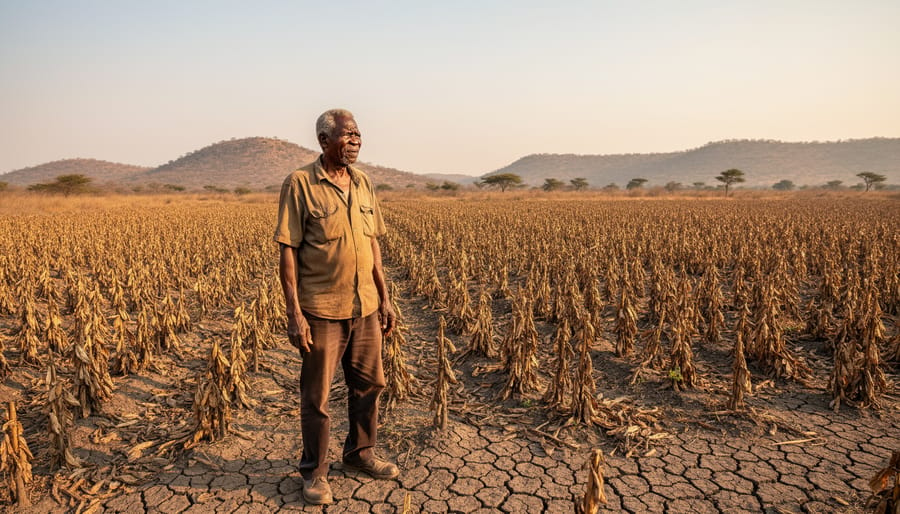
Southern Africa’s climate volatility has created a punishing cycle for Zimbabwe’s agricultural sector. The region faces an intensifying pattern of extreme weather events, droughts, floods, and cyclones, that strike with growing frequency and severity, making it nearly impossible for farmers to establish predictable growing seasons or recover between shocks.
The 2023/24 farming season exemplified this crisis when Zimbabwe recorded its longest dry spell, triggering near-total crop failure for over 5.5 million smallholder farmers. This wasn’t an isolated incident but the latest in a series of climate disruptions that have fundamentally undermined agricultural stability. Mozambique and Zimbabwe continue to experience recurring cyclones, floods, and droughts that displace communities and disrupt critical livelihood systems, creating a perpetual state of emergency rather than temporary setbacks.
These recurring shocks operate on multiple timescales. A prolonged drought might devastate one season’s crops, only to be followed by intense flooding that washes away topsoil and infrastructure farmers need for recovery. Cyclones can destroy irrigation systems, storage facilities, and access roads in a matter of hours. Each event compounds the last, eroding farmers’ resilience and their capacity to invest in sustainable agriculture practices that might buffer future impacts.
The human cost is staggering. Displaced families lose not just a season’s harvest but their homes, livestock, and accumulated agricultural knowledge tied to specific land. Communities watch productive farmland transform into unreliable terrain where traditional planting calendars no longer apply, forcing a wholesale rethinking of farming strategies amid immediate survival pressures.
Economic Impact and Agricultural Production Decline
The agricultural collapse presents a striking paradox in Zimbabwe’s economic narrative. While the country posted robust GDP growth of 6.1% in 2022 and 5.0% in 2023, these headline figures mask a deepening crisis in the sector that employs the majority of the population and underpins food security.
Agriculture’s contribution to overall growth has declined sharply, creating a dangerous disconnect between macroeconomic performance and rural livelihoods. The 2023/24 farming season’s longest dry spell devastated production systems, with over 5.5 million smallholder farmers experiencing near-total crop failure. This collapse reverberates through supply chains, rural employment, and household incomes in ways that GDP calculations don’t immediately capture.
The paradox becomes clearer when examining sectoral composition. Growth in mining, services, and urban economic activity can temporarily offset agricultural decline in national statistics, yet these sectors cannot replace agriculture’s role in feeding the population or employing rural communities. When the majority of districts face chronic food insecurity affecting more than 50% of residents, economic growth statistics reveal their limitations as measures of national wellbeing.
This disconnect creates policy challenges. Decision-makers must look beyond aggregate growth figures to understand the crisis facing farming communities. The record wheat harvest of 563,961 metric tons achieved in 2024 demonstrates recovery potential, but that success in one crop cannot compensate for the broader collapse in smallholder production systems that feed most Zimbabweans.
Who Qualifies for Agricultural Recovery Support
Pfumvudza/Intwasa Programme Criteria
The Pfumvudza/Intwasa programme targets smallholder farmers cultivating plots typically ranging from 0.1 to 5 hectares, with particular emphasis on those practicing rainfed agriculture. Eligible farmers must commit to establishing a minimum of 39 planting stations per household, each measuring approximately 16 square meters. This foundation plot design allows households to produce enough maize for their consumption while dedicating portions to marketable crops.
Production targets require farmers to adopt climate-smart agriculture techniques, including proper spacing, timely planting with first rains, mulching for moisture retention, and precision fertilizer application at each station. Participants must demonstrate willingness to attend mandatory training sessions covering these methods and commit to maintaining detailed records of planting dates and input usage.
The programme prioritizes households that experienced crop failure during the 2023/24 season and those residing in districts where chronic food insecurity affects over half the population. While the initiative now covers 1 million hectares nationwide, beneficiary selection gives preference to farmers who can demonstrate land tenure or documented cultivation rights, ensuring program resources reach those who can implement sustainable practices across consecutive seasons. Communal farmers, resettled households, and A1 model smallholders all qualify provided they meet the minimum plot requirements and training commitments.
Priority Groups and Vulnerable Communities
Zimbabwe’s agricultural recovery programs prioritize farmers in areas hit hardest by the 2023/24 dry spell, where chronic food insecurity now affects more than half of all districts. Households that experienced near-total crop failure during this period receive immediate consideration, particularly those with no alternative income sources and limited capacity to recover without external support.
Smallholder farmers working plots under five hectares form the primary target group, as they represent the 5.5 million producers who bore the brunt of production losses. Within this category, female-headed households, elderly farmers, and families caring for orphans or vulnerable children gain priority access due to their heightened susceptibility to climate shocks and limited resilience mechanisms.
Communities in Zimbabwe’s drought-prone regions, including areas with historically poor rainfall patterns and those experiencing recurrent displacement from cyclones and floods, rank among the top beneficiaries. The program also targets farmers in districts where wheat and maize production collapsed entirely, recognizing that these areas face the most severe food security gaps and require urgent intervention to restore productive capacity before the next planting season.
Vulnerability assessments conducted at ward level help extension officers identify qualifying households, ensuring support reaches those least able to recover independently from the agricultural crisis.
How to Access Recovery Programs and Support
Registration and Documentation Requirements
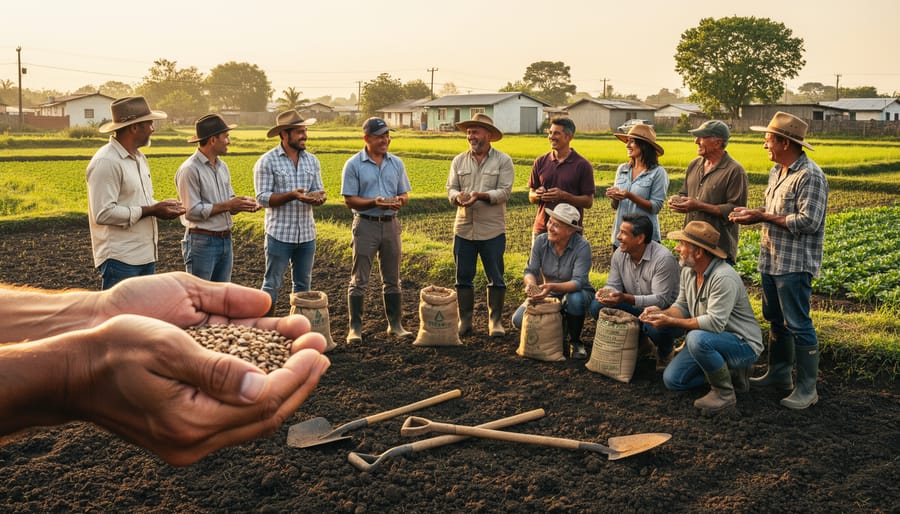
Farmers seeking to enroll in the expanded Pfumvudza/Intwasa programme must present several key documents during the registration process. Most districts require proof of land access or ownership, which can include formal title deeds, customary land certificates issued by traditional leaders, or written permission from landholders for those farming on communal land. Government extension offices generally accept documents that demonstrate legitimate agricultural use rather than requiring full legal ownership, recognizing that many smallholders operate under informal tenure arrangements.
Applicants must also provide basic household information including the number of family members, primary farmers responsible for cultivation, and existing agricultural assets such as livestock or equipment. Registration forms typically ask farmers to specify the size of land they currently cultivate and the crops they grow, which helps officials determine appropriate input allocations and training needs. Some districts request evidence of previous farming activity, such as records from prior harvests, participation in previous agricultural programs, or testimonials from local agricultural extension workers who can verify the applicant’s status as an active farmer.
Training and Capacity Building Components
Participation in the Pfumvudza/Intwasa programme requires farmers to complete training sessions before receiving inputs and beginning cultivation. These sessions introduce climate-smart agriculture techniques designed to maximize yields under Zimbabwe’s increasingly unpredictable rainfall patterns. Trainers cover conservation farming methods including proper plot preparation, correct spacing between planting stations, and optimal fertilizer application timing to ensure efficient use of limited water resources.
The curriculum focuses on practical skills farmers can immediately apply. Sessions demonstrate how to dig the characteristic Pfumvudza planting basins to the correct depth, mulching techniques that retain soil moisture during dry spells, and crop rotation strategies that restore soil fertility without expensive inputs. Trainers emphasize early planting to capture initial rains and proper seed placement to improve germination rates, both critical after the devastating 2023/24 season that left over 5.5 million smallholder farmers facing near-total crop failure.
Ongoing support extends beyond initial training. Agricultural extension officers conduct field visits throughout the growing season to monitor progress, troubleshoot challenges, and reinforce techniques. Participants receive follow-up group sessions addressing seasonal issues like pest management and water conservation during dry periods. This continuous engagement helps farmers adapt practices to changing conditions and builds long-term capacity for climate-resilient production.
Rights and Obligations of Program Participants
Support Entitlements and Resources
Farmers enrolled in Zimbabwe’s recovery programs receive a comprehensive package designed to restore agricultural productivity after the devastating 2023/24 drought. The Pfumvudza/Intwasa programme provides certified seed varieties selected for climate resilience, including drought-tolerant maize, sorghum, and millet cultivars suited to degraded conditions. Input packages typically include fertilizer allocations calibrated to small plot sizes, enabling intensive production on limited land.
Technical assistance forms a core component of program support. Participants gain access to agricultural extension officers who provide on-site training in conservation agriculture techniques, proper spacing methods, and optimal planting times. This hands-on guidance helps farmers transition from traditional practices to climate-smart approaches that maximize yields even during erratic rainfall periods.
Beyond immediate inputs, farmers receive ongoing agronomic support throughout the growing season. Extension workers conduct regular field visits to monitor crop development, diagnose pest or disease issues, and recommend corrective measures. Some programs also provide access to weather information services and early warning systems, helping farmers make informed decisions about planting and harvesting windows. For vulnerable households experiencing chronic food insecurity, supplementary food assistance may bridge gaps during lean periods while crops mature.
Farmer Commitments and Best Practices
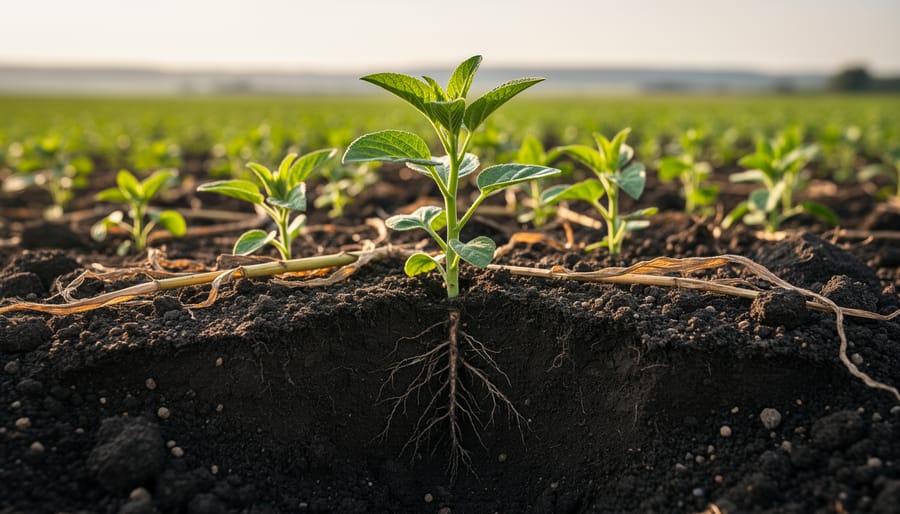
Farmers enrolled in recovery programs must commit to implementing climate-smart practices consistently throughout the growing season. This includes using conservation agriculture techniques such as minimum tillage, crop rotation, and timely planting within designated windows. Participants are required to apply inputs according to technical guidelines provided during training sessions, ensuring proper spacing, fertilizer application rates, and water conservation measures.
Regular reporting obligations form a critical part of program participation. Farmers must maintain basic production records, attend scheduled field visits from extension officers, and participate in monitoring activities that track crop performance and input utilization. These records help program administrators assess effectiveness and identify areas where additional support may be needed.
Sustainable land management practices are non-negotiable commitments. This means protecting soil health through mulching and composting, preventing erosion on sloped land, and avoiding practices that degrade farmland productivity over time. Farmers who fail to meet these commitments risk losing access to future program benefits, while those who demonstrate consistent adherence may qualify for expanded support or additional resources in subsequent seasons.
Renewable Energy as a Recovery Pathway
Solar-Powered Irrigation and Water Management
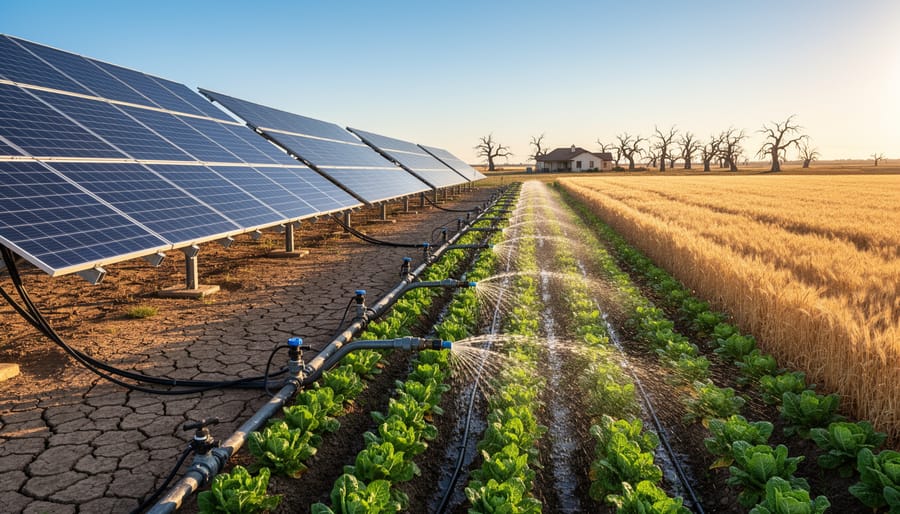
Solar pumping systems offer Zimbabwean farmers a practical pathway from devastating crop failure to reliable production. Unlike diesel-powered alternatives that require expensive fuel and frequent maintenance, solar powered irrigation uses photovoltaic panels to draw water from boreholes, rivers, or storage tanks directly to fields. For smallholder farmers recovering from the 2023/24 dry spell, this technology transforms water access from a seasonal gamble into a controlled resource.
The systems operate most effectively during peak sunlight hours, coinciding with high evapotranspiration periods when crops need water most. A typical installation includes solar panels, a submersible or surface pump, a controller, and distribution infrastructure like drip lines or sprinklers. Initial costs range from modest setups for vegetable gardens to larger installations serving multiple hectares, with falling panel prices making entry-level systems increasingly accessible.
Integrating renewable energy agriculture solutions addresses both immediate water scarcity and long-term climate resilience. Farmers gain independence from erratic rainfall patterns and grid electricity, enabling year-round cultivation of high-value crops. The technology also supports Pfumvudza/Intwasa programme participants by enhancing productivity on smaller plots through precise water application.
However, critical challenges remain: upfront capital requirements, technical skills for maintenance, and ensuring sustainable groundwater extraction. Successful implementation requires combining solar technology with proper water resource management and farmer training to avoid depleting aquifers while maximizing recovery potential.
Energy Solutions for Post-Harvest Processing
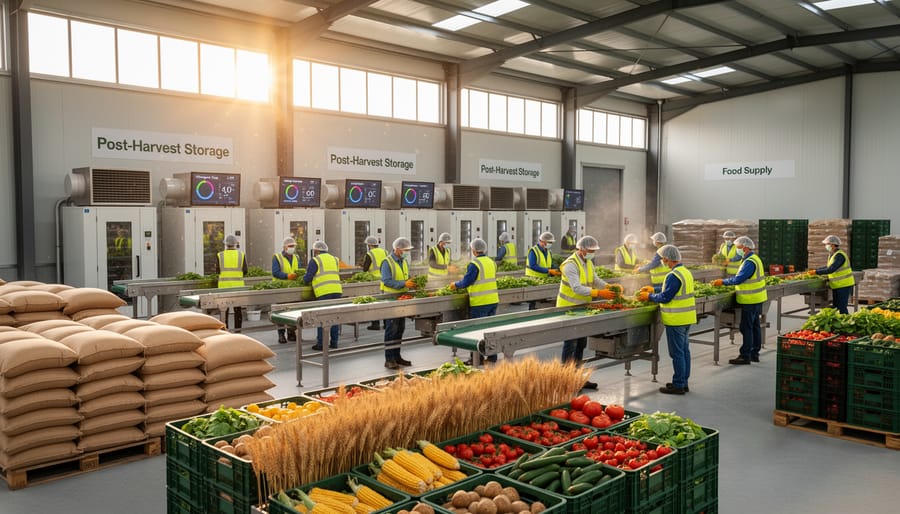
Post-harvest losses remain one of Africa’s most persistent agricultural challenges, often erasing up to 40% of a farmer’s harvest before crops ever reach consumers. In Zimbabwe’s current recovery context, where over 5.5 million smallholder farmers faced near-total crop failure during the 2023/24 season, protecting every grain becomes critical. Renewable energy technologies now offer practical solutions that transform how farmers store, dry, process, and add value to their harvests, directly improving incomes and food security.
Solar dryers eliminate the dependency on unpredictable weather and reduce drying time by half compared to traditional sun-drying methods. These systems use solar panels to power fans that circulate warm air through enclosed chambers, preventing mold growth and contamination while preserving nutritional quality. For grain farmers recovering from drought, solar dryers mean safer storage of maize, sorghum, and millet, reducing post-harvest spoilage from moisture damage and pests. The technology requires minimal maintenance and operates without fuel costs, making it sustainable for smallholders rebuilding after crop losses.
Cold storage powered by solar energy extends shelf life for perishable crops like vegetables and fruits, opening access to distant markets and better prices. Solar refrigeration units and cool rooms allow farmers to wait for favorable market conditions rather than selling immediately at depressed prices. This capability directly addresses income vulnerability that intensified following the agricultural collapse.
Processing equipment, mills, oil presses, and packaging machines, run efficiently on renewable energy, enabling farmers to capture value-addition margins previously lost to middlemen. Energy-smart farming integrates these technologies into cooperative models where communities share infrastructure costs, making advanced processing accessible even to smallholders participating in the Pfumvudza/Intwasa programme’s expansion to 1 million hectares.
Success Stories and Lessons from the Region
Zimbabwe’s remarkable wheat harvest achievement stands as a powerful testament to what coordinated recovery efforts can accomplish. In 2024, the country reached a record production of 563,961 metric tons of wheat, demonstrating that even after near-total crop failure affecting 5.5 million smallholder farmers during the devastating 2023/24 dry spell, agricultural systems can rebuild with the right interventions. This success emerged from combining improved seed varieties, climate-smart techniques, and strategic support to farmers who had experienced the longest recorded dry spell in recent memory.
The wheat achievement reveals crucial lessons for broader recovery. First, targeted programs that provide quality inputs alongside technical training create measurable results, even in climate-vulnerable regions. Second, diversifying crop production reduces dependence on rain-fed maize, which proved catastrophic during the drought. Third, sustained government commitment, evidenced by expanding the Pfumvudza/Intwasa programme to cover 1 million hectares, translates policy into tangible outcomes for farmers rebuilding their livelihoods.
Across Southern Africa, renewable energy integration is accelerating agricultural resilience. Solar-powered irrigation systems enable farmers to produce crops during dry periods that would previously have meant total loss. In regions where Mozambique and Zimbabwe continue experiencing recurring cyclones, floods, and droughts, off-grid renewable energy provides reliable power for cold storage, processing facilities, and water pumping, breaking the cycle of post-harvest losses that compound food insecurity.
These successes share common elements: they combine traditional agricultural knowledge with modern technology, prioritize smallholder farmer participation, and view energy access as fundamental infrastructure rather than luxury. Zimbabwe’s wheat milestone proves recovery is possible. The challenge now is replicating such results across other crops and districts, using renewable energy solutions to build climate resilience that can withstand the intensifying shocks affecting the region.
Where to Get Help and Official Support Channels
Farmers and agricultural stakeholders in Zimbabwe can access support for recovery and resilience through several official channels spanning government departments, extension services, international agencies, and renewable energy partners. Understanding where to turn for specific needs, whether seed distribution, technical training, emergency relief, or sustainable energy solutions, is crucial for participating effectively in recovery programs like the expanded Pfumvudza/Intwasa initiative.
The Ministry of Lands, Agriculture, Fisheries, Water and Rural Development serves as the primary government coordinating body for agricultural recovery efforts. Farmers can access services through provincial and district offices located across all regions, where extension officers provide information on program eligibility, distribute inputs, and deliver training on climate-smart techniques. The Agricultural Technical and Extension Services (AGRITEX) operates field offices in each district, offering hands-on support for implementing conservation agriculture methods, managing water resources, and adopting drought-resistant crop varieties.
- Ministry of Lands, Agriculture, Fisheries, Water and Rural Development, provincial and district offices nationwide for program enrollment and recovery support
- AGRITEX district extension offices, technical training, field demonstrations, and climate-smart agriculture guidance
- District Development Coordinators, local government liaison for identifying vulnerable farmers and coordinating relief distribution
- World Food Programme Zimbabwe, emergency food assistance and resilience-building initiatives in chronically food-insecure districts
- Food and Agriculture Organization (FAO), seed distribution, livestock support, and agricultural recovery technical assistance
- Zimbabwe Energy Regulatory Authority (ZERA), information on licensed renewable energy providers for solar irrigation and processing equipment
- Rural Electrification Agency, renewable energy project implementation and off-grid solutions for agricultural communities
International organizations including the World Food Programme and FAO maintain field offices in major cities and partner with local authorities to reach rural farming communities. These agencies coordinate emergency response for the regions most affected by the 2023/24 dry spell and provide technical expertise for long-term agricultural transformation. Village-level farmer groups and agricultural cooperatives also serve as access points, often functioning as registration hubs where extension officers conduct outreach for national programs. For renewable energy integration in farming operations, the Rural Electrification Agency and licensed solar equipment providers offer consultation on irrigation systems and post-harvest processing solutions that enhance climate resilience and food security.
How to Apply or Complete the Process
Farmers seeking to join Zimbabwe’s agricultural recovery programs should begin by contacting their local agricultural extension office (Agritex). Extension officers maintain current registration lists for the Pfumvudza/Intwasa programme and can confirm eligibility based on your farm size and location.
Visit your district Agritex office with basic documentation: proof of land access or ownership, national identification, and household details. Officers will assess your farm’s suitability for the program and explain the specific inputs allocated to participants in your district.
Once registered, you’ll receive a schedule for mandatory training sessions covering climate-smart techniques essential to the program. Attend all sessions, they’re prerequisites for receiving seeds, fertilizers, and technical support. Training typically occurs before planting seasons, so register early.
After training, extension officers will verify your implementation of the techniques learned, particularly conservation agriculture practices and proper plot preparation. Compliance with these methods determines continued participation and access to subsequent support.
Keep records of your production activities and yields. Programs require periodic reporting through your extension officer, who monitors progress and provides ongoing guidance. This documentation helps officials assess program effectiveness and plan future support.
For questions or complications, return to your local Agritex office rather than attempting alternative channels, ensuring your participation remains properly registered within official systems.
Frequently Asked Questions
The agricultural collapse in Zimbabwe has raised urgent questions from farmers, policymakers, and development stakeholders seeking to understand the crisis and access available support. These frequently asked questions address the most pressing concerns about the collapse, recovery pathways, and practical participation in resilience programs.
Why did Zimbabwe’s agriculture collapse?
The collapse resulted from the longest dry spell during the 2023/24 farming season, which caused near-total crop failure for over 5.5 million smallholder farmers and created chronic food insecurity in more than 50% of districts. This severe drought was compounded by recurring climate shocks including floods and cyclones that have repeatedly disrupted agricultural production across the region.
How do smallholder farmers qualify for the Pfumvudza/Intwasa programme?
Smallholder farmers qualify based on farm size thresholds, with priority given to those in districts experiencing chronic food insecurity and farmers who suffered near-total crop failure in the 2023/24 season. The expanded programme now covers 1 million hectares and targets vulnerable communities most affected by the drought.
What role can renewable energy play in agricultural recovery?
Renewable energy solutions, particularly solar-powered irrigation systems, provide consistent water access that helps farmers mitigate drought impact and maintain production during dry spells. Energy solutions also support post-harvest processing, crop storage, and value addition activities that improve food security and farmer incomes beyond the immediate crisis response.
Where can farmers displaced by the agricultural crisis access assistance?
Displaced farmers can access support through government agricultural extension offices in their districts, international organizations operating in Zimbabwe, and NGO partners coordinating recovery programs. Official government agencies maintain regional contact points specifically established to register affected farmers and connect them with available relief and recovery resources.
Understanding these fundamental aspects of the crisis helps farmers navigate recovery options more effectively. The intersection of traditional agricultural support with renewable energy solutions represents a forward-looking approach that addresses both immediate food security needs and long-term climate resilience.
Despite the severity of the collapse, Zimbabwe’s record wheat harvest of 563,961 metric tons in 2024 demonstrates that recovery is achievable when farmers receive proper support and adopt climate-smart techniques. This success provides a model for how coordinated programs can rebuild agricultural productivity even after catastrophic climate events, offering hope to the millions of smallholder farmers working to restore their livelihoods and food security.
Zimbabwe’s agricultural collapse stands as both a stark warning and a powerful catalyst for transformation. The 2023/24 crisis, which left over 5.5 million smallholder farmers facing near-total crop failure, exposed the devastating vulnerability of traditional farming systems to climate shocks. Yet this moment of crisis also illuminates a path forward, one that combines proven recovery programs with innovative renewable energy solutions to build lasting resilience.
The expansion of the Pfumvudza/Intwasa programme to cover 1 million hectares demonstrates that recovery is achievable when governments commit resources and farmers adopt climate-smart practices. Zimbabwe’s record wheat harvest of 563,961 metric tons in 2024 proves that agricultural revival can happen even in challenging conditions. These successes offer hope, but they also underscore the urgency of broader participation and sustained support.
Renewable energy integration represents more than a technical upgrade. Solar-powered irrigation, processing facilities, and water management systems provide the infrastructure farmers need to withstand future droughts and build profitable, sustainable operations. This convergence of agricultural recovery and clean energy creates opportunities for Zimbabwe to leapfrog outdated systems and model climate-resilient farming for the continent.
For government officials, development partners, investors, and agricultural organizations, the call is clear: support must be immediate, coordinated, and sustained. Farmers need accessible pathways to recovery programs, technical training, and energy solutions. Africa’s agricultural future depends on turning this crisis into a foundation for transformation, proving that climate vulnerability can be met with innovation, solidarity, and unwavering commitment to food security.