
Africa stands at a transformative crossroads where abundant natural resources intersect with pressing energy needs, creating an unprecedented opportunity to leapfrog traditional fossil fuel dependency and build a sustainable energy future from the ground up. With over 600 million people lacking reliable electricity access and blessed with some of the world’s highest solar irradiation levels, wind resources, and geothermal potential, the continent possesses both the urgency and the raw materials to become a global leader in clean energy deployment.
The promise is tangible and already materializing across the continent. Morocco’s Noor Ouarzazate Solar Complex demonstrates how visionary infrastructure can power millions of homes while creating thousands of jobs. Kenya has transformed its energy landscape by harnessing geothermal resources from the Rift Valley, now generating over 40% of its electricity from renewables. These successes prove that African nations can deploy renewable energy technologies at scale when supported by appropriate policies, financing mechanisms, and technical partnerships.
Yet the path forward demands honest acknowledgment of substantial obstacles. Financing gaps remain enormous, with sustainable energy projects requiring upfront capital that many African economies struggle to mobilize. Grid infrastructure limitations prevent efficient distribution of generated power, while policy inconsistencies across jurisdictions create uncertainty for investors. Technical capacity shortages and maintenance challenges further complicate project sustainability.
Understanding both the extraordinary potential and the complex barriers is essential for stakeholders committed to accelerating Africa’s energy transition. This comprehensive analysis examines proven opportunities, confronts real challenges head-on, and charts practical pathways toward a sustainable energy future that serves Africa’s development aspirations while contributing to global climate solutions.
Africa’s Solar Advantage: An Untapped Goldmine
The Numbers That Tell the Story
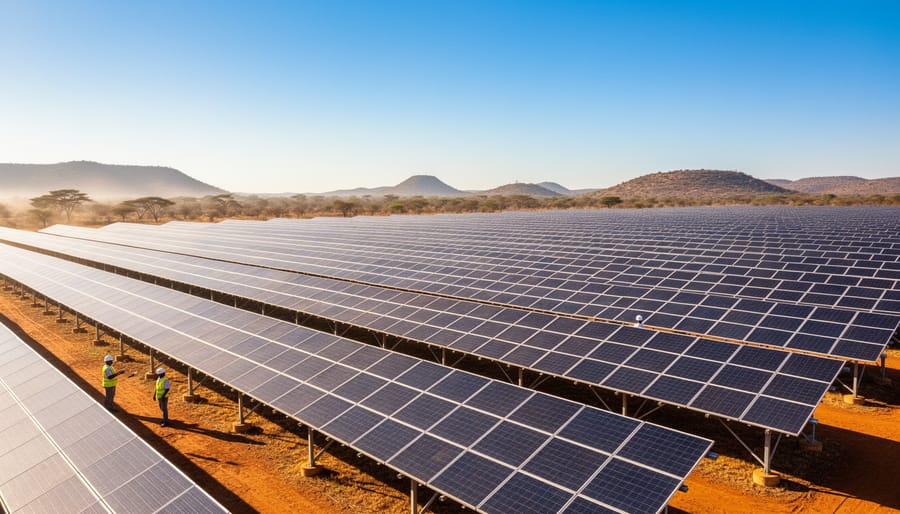
Africa’s solar potential isn’t merely promising—it’s extraordinary. The continent receives an average of 2,000 to 3,000 kilowatt-hours per square meter annually, surpassing most regions globally. To put this in perspective, Northern Africa experiences solar irradiation levels exceeding 2,800 kWh/m²/year, while even Central African nations maintain levels around 2,000 kWh/m²/year. Compare this to Europe’s average of 1,000 to 1,500 kWh/m²/year, and the magnitude of opportunity becomes clear.
Africa’s advantage extends to consistent sunlight exposure, with many regions receiving 325 sunshine days annually. The Sahara Desert alone captures enough solar energy to theoretically power the entire world several times over. Countries like Egypt, South Africa, and Morocco record daily peak sun hours ranging from 6 to 8 hours, optimal for photovoltaic systems and concentrated solar power installations.
The technical capacity is staggering: the International Renewable Energy Agency estimates Africa could generate 10 terawatts from solar photovoltaic systems alone. Currently, installed capacity sits below 10 gigawatts—representing less than 1 percent of potential. This gap between potential and utilization highlights both the challenge and opportunity.
South Africa’s Jasper Power Project demonstrates what’s achievable, generating 180 megawatts from solar farms in the Northern Cape, where irradiation exceeds 2,600 kWh/m²/year. Morocco’s Noor Complex harnesses similar conditions, proving that Africa’s solar abundance can translate into reliable, grid-scale electricity when properly developed.
Regional Hotspots for Solar Development
Africa’s solar potential is far from uniform, with certain regions standing out as exceptional hotspots for development. The Sahel region, stretching across the continent’s northern belt, receives some of the world’s highest solar irradiance levels, with annual averages exceeding 2,500 kilowatt-hours per square meter. Countries like Mali, Niger, and Mauritania benefit from clear skies and minimal cloud cover for over 300 days annually, creating ideal conditions for both utility-scale solar farms and distributed generation systems.
East Africa presents another compelling opportunity zone, where nations including Kenya, Tanzania, and Ethiopia combine strong solar resources with rapidly growing energy demand. The region’s equatorial location ensures consistent year-round sunlight, while diverse topography allows for strategic placement of solar installations. Kenya has particularly distinguished itself, with projects like the Garissa Solar Plant demonstrating the region’s capacity to deploy large-scale renewable infrastructure successfully.
Southern Africa, anchored by South Africa, Namibia, and Botswana, rounds out the continental hotspots. South Africa’s Northern Cape Province exemplifies the convergence of optimal geographic factors: high solar irradiance, vast uninhabited land, and proximity to existing transmission infrastructure. Namibia’s arid climate and low population density similarly position it as a solar powerhouse, with the Hardap region already hosting multiple successful installations.
These geographic advantages, combined with decreasing technology costs, position these regions as catalysts for Africa’s renewable energy transformation, offering blueprints for sustainable development that other areas can adapt and replicate.
Game-Changing Opportunities for Solar Energy Deployment
Solving Africa’s Energy Access Crisis
With over 600 million Africans still living without electricity access, the continent faces one of the world’s most pressing energy challenges. However, this gap also represents an unprecedented opportunity to leapfrog traditional grid infrastructure and embrace decentralized solar solutions that can transform lives and communities.
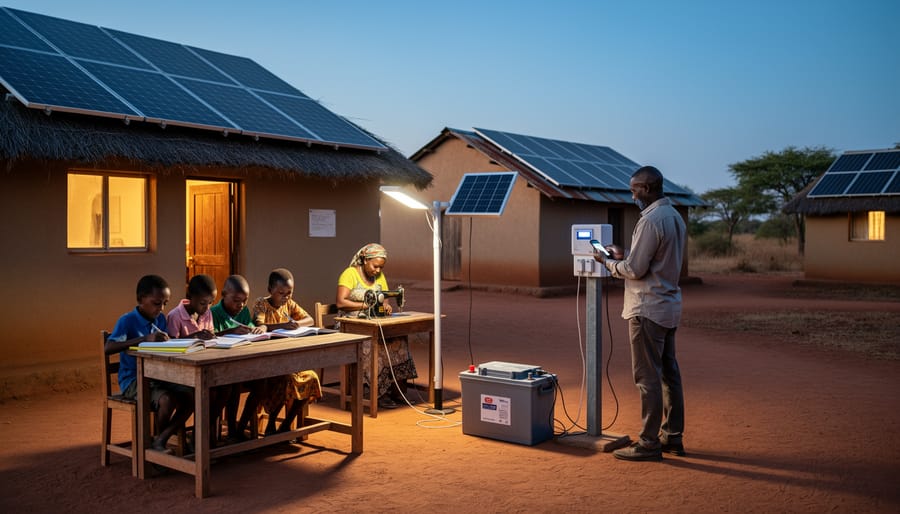
Off-grid and mini-grid solar systems are proving remarkably effective in addressing rural electrification where extending the central grid remains economically unviable. Unlike conventional electrification that requires massive upfront investment in transmission infrastructure, these decentralized models deliver power directly to communities through standalone solar home systems or localized mini-grids serving entire villages. This approach dramatically reduces deployment costs and timelines, making electricity accessible to remote populations that might otherwise wait decades for grid connection.
The success of companies like M-KOPA in Kenya and Azuri Technologies across multiple African markets demonstrates the viability of pay-as-you-go solar solutions. These innovative business models combine affordable technology with mobile money platforms, enabling households to access clean electricity for as little as fifty cents per day. In Rwanda, the government’s ambitious electrification program has connected over 350,000 households through off-grid solar in just five years, proving that targeted policies can accelerate adoption at scale.
Mini-grids are equally transformative for productive uses beyond basic lighting. Solar-powered micro-enterprises, from grain mills to cold storage facilities, are creating economic opportunities that extend far beyond household electrification. These systems foster local entrepreneurship while building energy resilience in communities previously dependent on expensive and polluting diesel generators.
Economic Growth and Job Creation
Solar energy presents transformative economic opportunities for Africa, positioning the sector as a cornerstone for sustainable industrialization and employment generation. The solar value chain creates diverse job opportunities spanning manufacturing, installation, maintenance, project development, and financing. According to recent analyses, the renewable energy sector could generate millions of direct and indirect jobs across the continent by 2030, with solar energy accounting for a substantial portion of this growth.
Local manufacturing potential remains particularly promising, as several African nations are establishing solar panel assembly plants and component production facilities. Countries like South Africa, Egypt, and Morocco are leading this trend, reducing import dependency while building technical capacity. These manufacturing hubs not only create employment but also contribute significantly to GDP growth through export potential to neighboring markets.
Skills development programs are emerging as critical enablers, with technical training centers and partnerships between governments, educational institutions, and private sector players producing qualified solar technicians and engineers. Rwanda’s solar workforce training initiatives and Kenya’s renewable energy certification programs exemplify successful models that other nations can replicate. Beyond direct employment, solar energy catalyzes broader economic activity by powering small and medium enterprises, extending productive hours for businesses, and enabling entirely new economic sectors in previously underserved areas, thereby fostering inclusive growth and poverty reduction.
Technology Innovations Making Solar More Accessible
Technological breakthroughs are fundamentally transforming solar energy accessibility across Africa. The cost of solar photovoltaic panels has plummeted by over 90% in the past decade, making installations economically viable for households and businesses previously reliant on expensive diesel generators or kerosene lamps. This price revolution, combined with enhanced panel efficiency, means communities can generate more power from smaller, more affordable systems.
Battery storage innovations represent equally significant progress. Modern lithium-ion batteries and emerging technologies now enable reliable energy storage, addressing solar’s intermittency challenge. Households can store daytime-generated electricity for evening use, while businesses maintain operations during grid outages. These systems are becoming increasingly compact and affordable, particularly through economies of scale in production.
Perhaps most transformative are innovative financing mechanisms tailored to African contexts. Pay-as-you-go solar models, integrated with mobile payment platforms like M-Pesa, have revolutionized market access. Companies such as M-KOPA in Kenya and Azuri Technologies across East Africa enable customers to purchase solar home systems through small, manageable daily payments via mobile money. This approach eliminates prohibitive upfront costs while building credit histories for previously unbanked populations.
These converging innovations create a powerful catalyst for energy democratization, proving that technological advancement paired with contextually appropriate business models can overcome traditional barriers to solar adoption throughout the continent.
Climate Action and Environmental Benefits
Solar energy presents African nations with a transformative opportunity to pursue economic development while meeting international climate commitments under the Paris Agreement. Unlike traditional industrialization pathways that locked earlier developers into carbon-intensive infrastructure, African countries can leapfrog directly to clean energy systems, establishing themselves as leaders in implementing effective climate mitigation strategies.
The climate benefits are substantial. By 2030, widespread solar adoption across Africa could prevent an estimated 400 million tonnes of CO2 emissions annually, contributing significantly to global climate goals while positioning the continent as a climate solution rather than a problem. Countries like Morocco and Kenya have already demonstrated this potential, with Morocco’s Noor Ouarzazate complex alone offsetting 760,000 tonnes of carbon emissions yearly.
Beyond climate benefits, solar energy delivers immediate health improvements through reduced air pollution. The World Health Organization estimates that household air pollution from traditional cooking fuels causes over 600,000 premature deaths annually in sub-Saharan Africa. Solar-powered alternatives eliminate these emissions, dramatically improving respiratory health, particularly for women and children. In Rwanda, the transition to solar home systems in rural areas has reduced indoor air pollution by 85 percent in participating households, demonstrating tangible health co-benefits alongside environmental gains.
The Roadblocks Standing in the Way
Infrastructure Deficits and Grid Limitations
Africa’s aging and inadequate power infrastructure presents one of the most significant barriers to renewable energy expansion. Many countries face grid infrastructure challenges including outdated transmission lines, insufficient interconnection capacity, and distribution networks unable to handle the variability inherent in solar and wind generation. The International Energy Agency estimates that Africa requires over $40 billion annually in grid investments to meet growing demand while integrating renewable sources.
Storage limitations compound these difficulties. Without adequate battery systems or pumped hydro capacity, excess solar generation during peak sunshine hours cannot be stored for evening demand, leading to potential grid instability. Countries like South Africa have experienced load shedding partly due to grid inflexibility when integrating variable renewables.
However, innovative solutions are emerging. Kenya’s successful deployment of mini-grids demonstrates how decentralized systems can bypass traditional infrastructure deficits while providing reliable power to remote communities. Regional power pools, such as the West African Power Pool, are enhancing cross-border electricity trading, allowing countries to balance renewable variability across larger geographic areas. Investment in smart grid technologies and battery storage facilities, particularly in Morocco and Rwanda, shows promising pathways to overcome these technical barriers while building resilient, future-ready energy systems.
Financing and Investment Barriers
Africa’s sustainable energy transition faces significant financing obstacles despite abundant renewable resources and growing market demand. High upfront capital requirements remain the primary barrier, with solar installations and wind farms requiring substantial initial investment before generating returns. This challenge intensifies in markets where renewable energy financing mechanisms remain underdeveloped or inaccessible to local developers.
Perceived investment risks, often amplified by credit rating methodologies that inadequately reflect project-specific realities, discourage international capital flows. Currency volatility presents additional concerns, as infrastructure costs are typically dollar-denominated while revenues are collected in local currencies subject to fluctuation. This mismatch creates uncertainty that conservative investors find difficult to navigate.
Limited access to affordable financing particularly constrains small and medium-scale projects across the continent. While multilateral development banks have increased their renewable energy portfolios, commercial banks frequently lack the technical expertise to properly assess project viability, resulting in prohibitively high interest rates or outright rejection of promising ventures.
However, innovative solutions are emerging. Blended finance structures combining concessional funding with commercial capital have proven successful in countries like Kenya and South Africa. Regional development finance institutions are establishing dedicated green energy facilities, while international partnerships are helping build local financial sector capacity. Development finance institutions now offer currency hedging instruments specifically designed for African renewable projects, reducing exchange rate risks. These evolving mechanisms demonstrate that financing barriers, while substantial, are not insurmountable when stakeholders collaborate creatively to structure appropriate solutions for Africa’s unique contexts.
Policy, Regulatory, and Institutional Challenges
Navigating the policy landscape remains one of Africa’s most significant barriers to solar energy expansion. Many countries face inconsistent regulatory frameworks that shift with political transitions, creating uncertainty for investors and developers. In some nations, outdated energy regulations designed for centralized fossil fuel systems fail to accommodate distributed renewable energy models, slowing project approvals and grid integration.
Bureaucratic complexities further complicate implementation. Solar projects often require approvals from multiple government agencies with overlapping jurisdictions, extending timelines from months to years. Import tariffs on solar equipment vary widely across the continent, sometimes contradicting renewable energy goals by making technology unnecessarily expensive.
The absence of standardized technical requirements and certification processes creates additional obstacles. Different countries maintain varying standards for equipment quality, installation practices, and grid connection protocols, hindering regional cooperation and economies of scale.
However, progress is emerging. Rwanda’s streamlined one-stop permitting system has reduced project approval times significantly, demonstrating how administrative reform accelerates deployment. The African Union’s recent push for harmonized renewable energy policies across regional economic communities offers promising momentum toward addressing these challenges.
Strengthening institutional capacity through training programs for regulatory officials and establishing independent energy regulators with clear mandates can transform these obstacles into opportunities. Countries that prioritize transparent, stable policy environments are already attracting substantial investment and technological partnerships, proving that governance improvements directly enable sustainable energy futures.
Technical Capacity and Skills Gaps
Africa’s renewable energy transition faces significant technical capacity constraints that require urgent attention. The continent currently experiences a critical shortage of trained technicians and engineers capable of installing, operating, and maintaining solar installations and other renewable energy systems. This skills deficit spans multiple levels, from specialized engineers who can design large-scale grid integration systems to field technicians who perform routine maintenance on distributed solar home systems.
Limited local manufacturing capacity compounds these challenges. Most African nations rely heavily on imported solar panels, inverters, and batteries, creating supply chain vulnerabilities and increasing project costs. Countries like South Africa and Morocco have begun establishing local assembly facilities, demonstrating the potential for regional manufacturing hubs. However, scaling this capacity across the continent requires substantial investment in industrial infrastructure and workforce development.
Maintenance infrastructure remains inadequate in many regions, particularly in rural areas where energy access gaps are most pronounced. The absence of reliable spare parts supply chains and certified service providers often leads to premature system failures and abandoned installations. This reality undermines confidence in renewable energy solutions and wastes valuable investments.
Addressing these gaps demands comprehensive capacity building programs. Successful initiatives include Kenya’s partnerships with international organizations to establish solar technician training centers and Rwanda’s collaboration with private sector companies to develop local expertise. Technology transfer agreements that include knowledge sharing, rather than merely equipment sales, prove most effective. Regional technical colleges and universities must integrate renewable energy curricula, while governments should incentivize apprenticeship programs connecting students with operational projects, ensuring theoretical knowledge translates into practical skills that sustain Africa’s energy transformation.
Proven Pathways: What’s Already Working
Case Study: Morocco’s Noor Complex
Morocco’s Noor Complex in Ouarzazate stands as Africa’s most ambitious solar achievement, demonstrating what strategic vision and international collaboration can accomplish. Spanning over 3,000 hectares with a combined capacity exceeding 580 MW, this concentrated solar power facility provides electricity to over two million Moroccan citizens while reducing carbon emissions by 760,000 tons annually.
The project’s success stems from an innovative partnership model combining Moroccan governmental leadership through MASEN (Moroccan Agency for Sustainable Energy) with international financing from the World Bank, African Development Bank, and European institutions. This blended finance approach, totaling $9 billion, offers a replicable blueprint for other African nations seeking large-scale renewable deployment without overburdening national budgets.
Key lessons include the importance of policy stability, transparent procurement processes, and long-term power purchase agreements that guarantee investor confidence. The complex also features thermal energy storage, enabling electricity generation up to seven hours after sunset, addressing the intermittency challenge that often hampers solar projects.
For neighboring countries like Tunisia, Algeria, and Sahelian nations blessed with abundant solar irradiance, Noor exemplifies how technical expertise transfer and South-South cooperation can accelerate renewable transitions. The project proves that Africa can lead in clean energy innovation when supportive frameworks meet international partnership commitment.
Kenya’s Off-Grid Solar Revolution
Kenya has emerged as a global leader in off-grid solar innovation, demonstrating how distributed energy solutions can leapfrog traditional infrastructure challenges. At the heart of this revolution is the pay-as-you-go model pioneered by companies like M-Kopa, which has connected over one million homes to clean electricity. This approach addresses a fundamental barrier: the upfront cost of solar home systems that previously put them beyond reach for most rural households.
The integration of mobile money platforms, particularly M-Pesa, has been transformative. Customers make small daily payments via their phones—often less than what they previously spent on kerosene—gradually owning their solar systems over 12 to 24 months. This model aligns payment structures with household cash flows, making renewable energy both accessible and financially viable for low-income families.
Beyond M-Kopa, companies like d.light and BBOX have expanded the ecosystem, collectively reaching millions of Kenyans. These systems typically include LED lighting, phone charging capabilities, and increasingly, power for small appliances and productive uses like irrigation pumps. The success has spurred job creation across sales, installation, and maintenance sectors while improving education outcomes and health by replacing toxic kerosene lamps. Kenya’s experience offers a replicable blueprint for other African nations seeking to expand energy access rapidly and sustainably.
Public-Private Partnerships Driving Progress
Collaborative financing models have proven instrumental in accelerating Africa’s solar energy transition. Public-private partnerships are unlocking capital and expertise that individual entities couldn’t mobilize alone. The Scaling Solar program, developed by the International Finance Corporation, exemplifies this approach by bringing together governments, development banks, and private investors to deliver competitively priced solar projects across Zambia, Senegal, and Ethiopia. These frameworks reduce investment risks through standardized procurement processes and credit guarantees, attracting international solar developers.
In Morocco, the Noor Ouarzazate Solar Complex demonstrates how government vision combined with multilateral development bank financing and private sector execution can deliver transformative infrastructure. The African Development Bank’s Desert to Power initiative further illustrates how coordinated efforts between development finance institutions and commercial investors can mobilize billions toward the Sahel region’s solar potential.
Kenya’s Lake Turkana Wind Power Project showcases successful risk-sharing mechanisms where European development banks provided concessional finance alongside commercial lenders, de-risking private investment. These collaboration models create replicable templates, demonstrating that aligned incentives and shared responsibility between public and private sectors can overcome traditional barriers to renewable energy financing in emerging markets.
Building Bridges: The Role of International Collaboration
Technology Transfer and Capacity Building
Bridging the knowledge gap between established and emerging renewable energy markets requires robust technology transfer mechanisms and deliberate capacity building initiatives. International partnerships have become instrumental in accelerating Africa’s sustainable energy transition, with organizations like the African Development Bank’s Sustainable Energy Fund for Africa facilitating technical training programs across multiple countries. These initiatives focus on developing local expertise in solar installation, grid integration, and maintenance procedures, ensuring communities can sustain projects long after initial deployment.
The German-African Energy Partnership exemplifies successful knowledge exchange, having trained over 2,000 African energy professionals since 2017 in renewable energy technologies and policy frameworks. Similarly, China’s Belt and Road Initiative has established vocational training centers in Ethiopia and Kenya, equipping technicians with hands-on experience in solar panel manufacturing and system design.
Universities are increasingly partnering with international institutions to develop specialized renewable energy curricula. The African Clean Energy Corridor initiative demonstrates how regional collaboration can standardize training programs while respecting local contexts. However, challenges persist in retaining trained professionals who often migrate toward better opportunities abroad. Successful programs now incorporate entrepreneurship training, enabling graduates to establish local renewable energy businesses. This approach not only builds technical capacity but creates sustainable employment ecosystems, transforming knowledge recipients into innovation leaders who can adapt global technologies to address Africa’s unique energy challenges.
Innovative Financing Mechanisms
Innovative financing mechanisms are unlocking capital for African solar projects at unprecedented scales, addressing one of the continent’s most significant barriers to renewable energy deployment. Green bonds have emerged as a powerful tool, with South Africa leading African nations in issuing these instruments specifically for clean energy infrastructure. These bonds allow governments and corporations to raise capital from environmentally conscious investors while demonstrating commitment to climate action.
Blended finance structures combine public development funds with private capital, effectively de-risking projects in nascent markets. Development finance institutions like the African Development Bank and the World Bank have pioneered this approach, providing concessional loans and guarantees that attract commercial investors to solar ventures across Kenya, Senegal, and Nigeria. Climate funds, including the Green Climate Fund, have allocated millions toward utility-scale solar installations and distributed energy systems.
Pay-as-you-go financing models represent grassroots innovation, enabling rural households to access solar home systems through mobile money platforms. Companies like M-KOPA have successfully deployed this mechanism across East Africa, proving its viability. Currency hedging facilities and local currency financing options are increasingly available, reducing exchange rate risks that previously deterred investment. These diverse financial instruments collectively create pathways for different investor types and project scales, transforming Africa’s solar landscape from capital-constrained to increasingly investment-ready.
The Path Forward: Turning Potential into Reality
Priority Actions for Governments and Policymakers
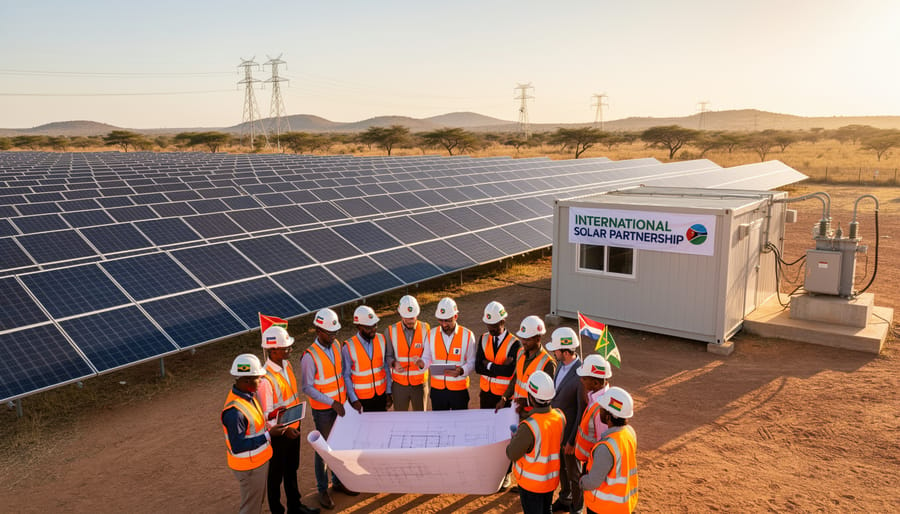
Governments and policymakers hold the key to unlocking Africa’s sustainable energy potential through strategic action. First, streamlining project approval processes is essential—reducing regulatory bottlenecks that currently delay renewable energy projects by months or years. Countries like Morocco have demonstrated success through establishing dedicated renewable energy agencies with clear mandates and expedited permitting pathways.
Implementing risk-mitigation instruments such as sovereign guarantees and currency hedging facilities can address investor concerns about political and economic stability. Rwanda’s approach of offering standardized power purchase agreements with government backing has attracted significant private sector participation. Additionally, reforming electricity tariff structures to reflect true generation costs while protecting vulnerable consumers through targeted subsidies creates sustainable pricing models.
Strengthening institutional capacity through technical training programs for energy regulators and utility staff ensures effective sector management. Regional policy harmonization through bodies like the African Union can facilitate cross-border power trading and economies of scale.
Fiscal incentives matter significantly—tax holidays, import duty exemptions on renewable energy equipment, and concessional financing mechanisms lower investment barriers. Kenya’s feed-in tariff system successfully catalyzed private renewable energy development, offering replicable lessons across the continent.
Finally, integrating energy planning with broader development strategies—linking electrification to healthcare, education, and economic zones—maximizes impact. Transparent governance frameworks and anti-corruption measures build investor confidence while ensuring communities benefit equitably from energy transitions.
What Investors and Private Sector Can Do
Private sector investors and businesses stand at the forefront of Africa’s sustainable energy transformation, with strategic opportunities to generate both financial returns and meaningful impact. The continent’s US$2 trillion energy infrastructure gap by 2040 represents not just a challenge, but an invitation for innovative investment approaches.
Successful market entry requires understanding Africa’s unique risk-reward landscape. Blended finance mechanisms, which combine concessional capital with commercial investment, have proven effective in de-risking early-stage projects. Development finance institutions offer valuable partnership opportunities, providing political risk insurance and technical assistance that strengthen investment portfolios.
Innovative business models are reshaping the sector. Pay-as-you-go solar systems pioneered by companies like M-KOPA have demonstrated how technology and flexible payment structures can unlock massive markets among unbanked populations. Mini-grid developers are increasingly partnering with anchor clients—hospitals, telecom towers, and manufacturing facilities—to ensure baseline revenue streams that attract commercial financing.
Investors should prioritize local partnerships and capacity building. Joint ventures with African enterprises provide market intelligence, regulatory navigation, and community trust that external actors struggle to establish independently. Companies like South Africa’s Distributed Power Africa exemplify this approach, combining international capital with local expertise to deliver distributed energy solutions across multiple countries. The key is viewing investment not as extraction, but as long-term partnership that builds resilient energy ecosystems benefiting all stakeholders.
Africa stands at a pivotal juncture in its energy evolution, where the transformative potential of solar power offers unprecedented opportunities to reshape the continent’s sustainable energy landscape. The convergence of declining technology costs, abundant solar resources, and growing awareness of climate imperatives creates a unique window for accelerated renewable energy deployment. Throughout this exploration, we have witnessed both the remarkable promise and the tangible obstacles that characterize Africa’s solar energy journey.
The opportunities are substantial and multifaceted. Solar energy can address energy poverty affecting millions, catalyze economic development, create employment opportunities, and position African nations as leaders in the global clean energy transition. Success stories from Morocco’s Noor complex to Kenya’s off-grid innovations demonstrate that these opportunities are not merely theoretical but achievable with appropriate strategies and commitment.
Yet acknowledging challenges remains essential for realistic progress. Infrastructure gaps, financing constraints, policy inconsistencies, and technical capacity limitations require honest assessment and targeted interventions. These obstacles, while significant, are not insurmountable. The solutions lie in strengthening regional collaboration, attracting innovative financing mechanisms, building local expertise, and fostering enabling policy environments that encourage investment while ensuring equitable access.
The path forward demands collective action from all stakeholders. Governments must prioritize supportive regulatory frameworks and infrastructure investments. International organizations and development partners should continue facilitating knowledge transfer and financial resources. Private sector actors must embrace innovative business models that balance profitability with social impact. Communities and civil society organizations play crucial roles in ensuring inclusive energy transitions that leave no one behind.
Africa’s solar future is not predetermined but rather shaped by choices made today. With sustained collaboration, continuous innovation, and unwavering commitment to sustainability principles, the continent can harness its solar abundance to power prosperity, resilience, and environmental stewardship for generations to come.